

Researchers from the UK and EU are recreating odours as part of the Odeuropa project, using algorithms and drawing on visual and written evidence

An outdoor market in Rome, 1946: Italian scientists are scouring old cooking manuals and medical formulae to recreate smells. Photograph: Bettmann/Bettmann Archive
Dung, snuff, fish and old leather: these may turn out to be the ingredients required for time travel. Academics who are restoring the lost smells of European history want aromas like these to be introduced to a wide range of museums and tourist landmarks.
Working under the banner Odeuropa, a group of chemists and historians have spent more than two years isolating and reproducing key scents associated with significant moments and locations. Smell, they argue, has been unfairly ignored in academic attempts to understand the past, especially considering its impact on daily life.
“There has been a hierarchy of the senses in science and in historical study. We want to see a multisensory approach,” said Cecilia Bembibre, a lecturer in sustainable heritage at University College London (UCL). “There has been an idea that smell was a less than noble human sense, and that it was somehow less objective, less educated and even less trustworthy.”
Bembibre cited an example where a scent to match the odour of the dirty canals of old Amsterdam was created as part of a set designed for the Fleeting – Scents in Colour exhibition at the Mauritshuis in The Hague.
The consortium of experts involved in the project has its headquarters in Amsterdam, but there are research bases in Germany, Italy, France and Slovenia, as well as at UCL and Anglia Ruskin University in Cambridge.
The wider project, funded by a €2.8m grant from the EU’s Horizon programme in 2020, aims to establish the science of olfactory history by drawing on visual and written evidence to put together the key smells generated by outdated trades, habits and diets. Dr Marieke van Erp, a project manager on the Odeuropa experiment, will liaise between the different disciplines to create a multidimensional, digital, searchable representation of our olfactory heritage.
“In Germany, they are analysing tens of thousands of historical images related to smell, while in Italy they are concentrating on textual analysis, from old medical formulas to cooking manuals,” said Bembibre, a researcher with the Odeuropa project who also works at the UCL Institute for Sustainable Heritage, where she recently completed a PhD entitled Smell of Heritage.

She explained that much of the work has focused on teaching computers to recognise images that relate to smells, for example a sketch of someone holding their nose. By exposing digital search tools to a succession of similar images, researchers can create an algorithm that recognises gestures in other illustrations.
Eventually this work will allow the collection of an encyclopaedia of historic smells, a side element of the project being led by Dr William Tullett at Anglia Ruskin. These smells will explain changing world environments, as well as giving an insight into the lives of those involved. Olfactory cues, the researchers argue, should also be saved for posterity, not just visual, physical and written ones.
But there are many nasal complexities to negotiate – as Bembibre points out: “It is really hard to get the information you need to bring back smells.” Her own chemical work has reproduced the scent of a 1750s potpourri at Knole – the ancestral home of the Sackville-West family in Kent – a description of which appears in Virginia Woolf’s novel Orlando.
She has also reproduced the smell of the library at St Paul’s Cathedral in London by extracting detectable elements from the air in 2017, before it was refurbished. She then invited a specialist perfumer, Sarah McCartney, to attempt to create the same olfactory experience based only on her instincts about its components. In random trials, the public was equally convinced by both attempts to mimic the library’s smell.
“We are trying to decide if it matters academically whether we preserve authentic smells with the right chemicals or whether we simply try to evoke an experience by creating a similar effect today,” Bembibre said.
The other difficulty for researchers is that human reactions to smells have changed fairly radically. “We don’t have historical noses. We just don’t smell in the same way now, and some smells mean different things.”
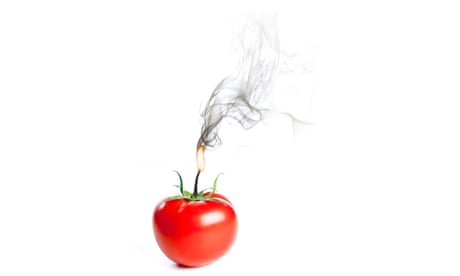
Happily, not all lost smells are nasty ones. Odeuropa is also reseaching the smell of incense and its historical and cultural significance .“We really want to engage communities. There are ‘nose witnesses’ alive now who can help us recreate smells from their childhoods or from trades that no longer exist,” Bembibre said.
Odeuropa’s research has benefited from an increased interest among commercial perfumers in niche scents – leather, spice and smoke are now common components in expensive brands.
Artists have also begun to approach the world of scent, choosing to accompany gallery shows with bespoke aromas, such as the Anicka Yi show in Tate Modern’s Turbine Hall in London last autumn. The Jorvik Viking Centre in York led the way by introducing smells to its exhibits more than two decades ago.
Cô giải thích rằng phần lớn công việc tập trung vào việc dạy máy tính nhận dạng các hình ảnh liên quan đến mùi, ví dụ như một bức phác thảo về một người nào đó đang ngoáy mũi. Bằng cách cho các công cụ tìm kiếm kỹ thuật số tiếp xúc với một loạt các hình ảnh tương tự, các nhà nghiên cứu có thể tạo ra một thuật toán nhận dạng cử chỉ trong các hình minh họa khác.
Quảng cáo
Cuối cùng, công việc này sẽ cho phép thu thập một bộ bách khoa toàn thư về các mùi lịch sử, một yếu tố phụ của dự án do Tiến sĩ William Tullett tại Anglia Ruskin đứng đầu. Những mùi này sẽ giải thích môi trường thế giới đang thay đổi, cũng như mang lại cái nhìn sâu sắc về cuộc sống của những người có liên quan. Các nhà nghiên cứu lập luận rằng các tín hiệu khứu giác cũng nên được lưu lại cho hậu thế, không chỉ là những dấu hiệu bằng thị giác, vật lý và chữ viết.
Nhưng có rất nhiều phức tạp về mũi để thương lượng - như Bembibre chỉ ra: “Thật sự rất khó để có được thông tin bạn cần để mang lại mùi”. Công việc hóa học của chính cô đã tái tạo mùi hương của một nồi lẩu thập niên 1750 tại Knole - quê hương của gia đình Sackville-West ở Kent - một mô tả xuất hiện trong tiểu thuyết Orlando của Virginia Woolf.
Cô cũng đã tái tạo mùi của thư viện tại Nhà thờ St Paul ở London bằng cách chiết xuất các yếu tố có thể phát hiện được từ không khí vào năm 2017, trước khi nó được tân trang lại. Sau đó, cô đã mời một nhà pha chế nước hoa chuyên nghiệp, Sarah McCartney, cố gắng tạo ra trải nghiệm khứu giác tương tự chỉ dựa trên bản năng của cô về các thành phần của nó. Trong các thử nghiệm ngẫu nhiên, công chúng bị thuyết phục như nhau bởi cả hai nỗ lực bắt chước mùi của thư viện.
Bembibre cho biết: “Chúng tôi đang cố gắng quyết định xem vấn đề học thuật có quan trọng về mặt học thuật hay không, liệu chúng tôi bảo quản mùi đích thực bằng các hóa chất phù hợp hay chỉ đơn giản là cố gắng gợi lên trải nghiệm bằng cách tạo ra một hiệu ứng tương tự ngày nay.
Khó khăn khác đối với các nhà nghiên cứu là phản ứng của con người đối với mùi đã thay đổi khá triệt để. “Chúng tôi không có những mũi nhọn lịch sử. Bây giờ chúng ta không ngửi theo cùng một cách và một số mùi có nghĩa là những điều khác nhau. "
Cà chua tươi trên nền trắng có khói bốc ra từ cuống
Mùi hương và khả năng cảm nhận: điều gì đằng sau sự gia tăng của các mùi cực đoan?
Đọc thêm
Đáng mừng là không phải tất cả các mùi bị mất đều là những mùi khó chịu. Odeuropa cũng đang nghiên cứu lại mùi hương và ý nghĩa lịch sử và văn hóa của nó. “Chúng tôi thực sự muốn gắn kết cộng đồng. Bây giờ có những ‘nhân chứng mũi tên’ còn sống, những người có thể giúp chúng tôi tạo lại mùi từ thời thơ ấu của họ hoặc từ những ngành nghề không còn tồn tại, ”Bembibre nói.
Nghiên cứu của Odeuropa đã thu được lợi ích từ việc các nhà sản xuất nước hoa thương mại ngày càng quan tâm đến mùi hương thích hợp - da, gia vị và khói hiện là những thành phần phổ biến trong các thương hiệu đắt tiền.
Các nghệ sĩ cũng đã bắt đầu tiếp cận với thế giới mùi hương, lựa chọn đồng hành cùng các buổi trình diễn thư viện với hương liệu đặt làm riêng, chẳng hạn như buổi trình diễn Anicka Yi tại Tate Modern’s Turbine Hall ở London vào mùa thu năm ngoái. Trung tâm Viking Jorvik ở York đã dẫn đầu bằng cách giới thiệu mùi cho các cuộc triển lãm của nó hơn hai thập kỷ trước.
Bài báo này đã được sửa đổi vào ngày 4 tháng 7 năm 2022 để sửa lỗi chính tả họ của Marieke van Erp. Ngoài ra, một phiên bản trước đó đã mô tả sai về việc tạo ra những con kênh bẩn thỉu của mùi hương Amsterdam cũ cho Van Erp. Trên thực tế, mùi hương đó được tạo ra như một phần của bộ được thiết kế cho cuộc triển lãm Fleeting - Scents in Colour tại Mauritshuis ở The Hague. Các khía cạnh khác trong nghiên cứu của Odeuropa cũng đã được làm rõ.
Researchers from the UK and EU are recreating odours as part of the Odeuropa project, using algorithms and drawing on visual and written evidence
Dung, snuff, fish and old leather: these may turn out to be the ingredients required for time travel. Academics who are restoring the lost smells of European history want aromas like these to be introduced to a wide range of museums and tourist landmarks.
Working under the banner Odeuropa, a group of chemists and historians have spent more than two years isolating and reproducing key scents associated with significant moments and locations. Smell, they argue, has been unfairly ignored in academic attempts to understand the past, especially considering its impact on daily life.
Continue reading...* Nguồn bài viết Tư vấn du học Anh Quốc - Quốc Tế Du Học Đồng Thịnh dongthinh.co.uk (+84) 96 993.7773 | (+84) 96 1660.266 | (+44) 020 753 800 87 | info@dongthinh.co.uk

Post a Comment