

When PhD student Sigourney Bell turned to Twitter to connect with other Black scientists, she could never have guessed that this would be the beginning of a journey that would see her co-founding an organisation that champions Black excellence in cancer research and medicine.

When PhD student Sigourney Bell turned to Twitter to connect with other Black scientists, she could never have guessed that this would be the beginning of a journey that would see her co-founding an organisation that champions Black excellence in cancer research and medicine.
It wasn’t until I began my own PhD that I met another Black woman with a PhD, despite working for three pharmaceutical companies before I joined Cancer Research UK Cambridge Institute.
I think representation made a bigger difference to my journey than I first realised. The only Black teacher I had during primary and secondary school was my biology teacher. Seeing her in that space, along with her encouragement, meant that I could see myself as a biologist too.
Everyone knows about George Floyd and the unrest during the summer of 2020, but they might not have heard about Christian Cooper. During that summer he was birdwatching in Central Park and was accused of something he didn’t do. Black people in the bird watching and ornithology communities began talking about how, in certain areas, they felt unsafe, just doing what they loved.
These conversations grew – Black people in science, technology, engineering, medicine and other fields, particularly in academia, talked about not feeling a sense of belonging. This was the beginning of the Black in... movement – networks to connect Black people working in the same field.

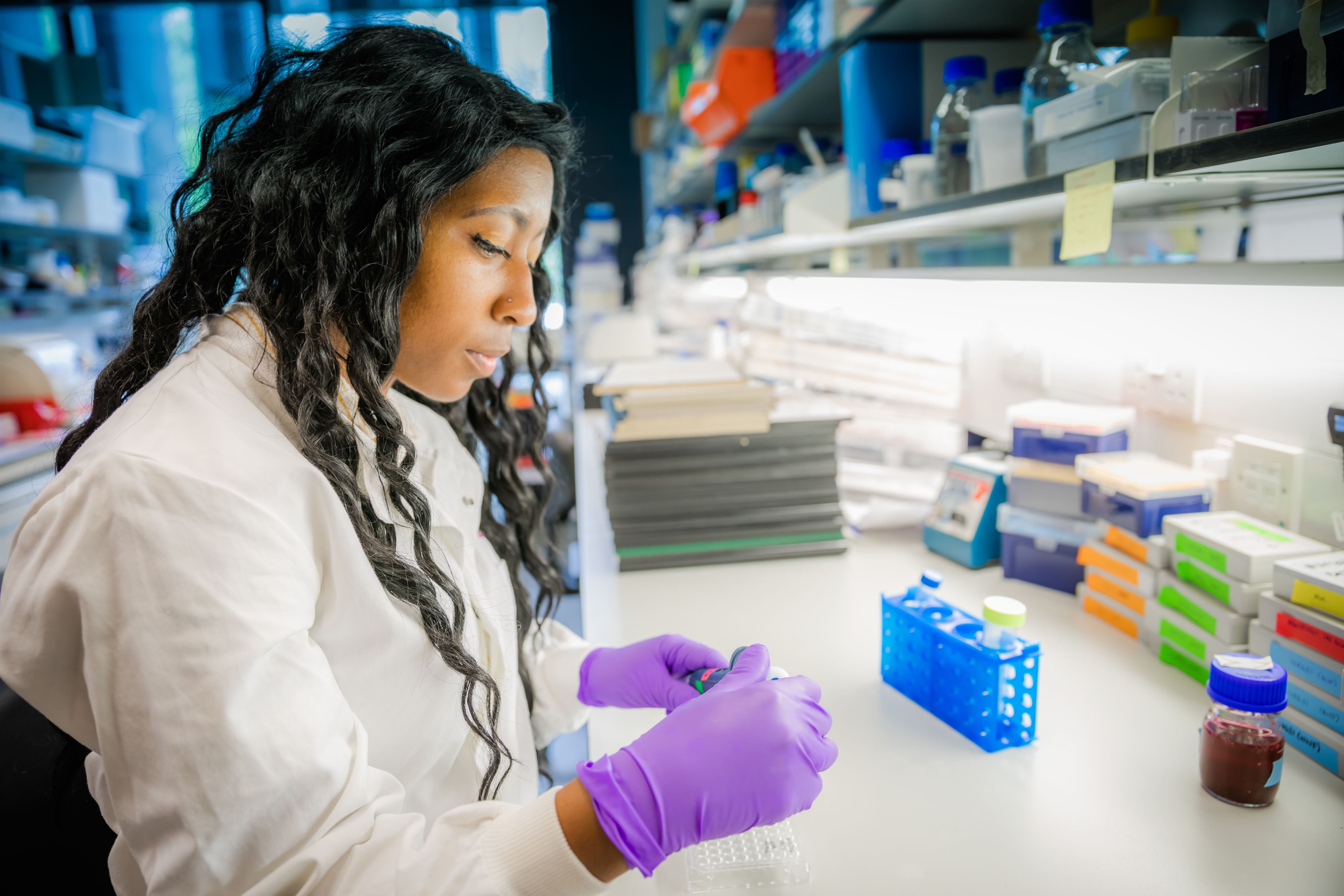
Around this time, I’d also been trying to find a community. I turned to Twitter and connected with Black scientists around the world working in cancer research. One of the scientists was Henry Henderson who was a postdoc at Vanderbilt University, Tennessee and through connecting with him via a DM, Black in Cancer emerged – with a mission to promote the visibility of Black scientists working in medicine and cancer research.
We also wanted people in the Black community to be informed and empowered when making decisions about their own health care. We do this through the Cancer Awareness Project. This involves patients, clinicians and researchers speaking to the public about cancer.
Our other main initiative is mentorship. Through the Black in Cancer Pipeline Programme, 15 UK students and 15 US students have received nine months of mentorship with senior cancer researchers from both industry and academia and are now on a fully paid eight-week lab placement.
We’ve been working to increase the pipeline from undergraduate study right through to tenured positions. We’ve given out three postdoctoral awards (each worth $75,000 (~£64,000) a year for three years increasing to $100,000 (~£85,000) if researchers transition to a faculty position) and a Distinguished Investigator Award ($100,000 (~£85,000) a year for three years)

Alongside carrying out my own research – I’m working to develop treatments for a rare paediatric brain tumour – we’ve also been organising the Black in Cancer Conference to be held 10-11 October 2022 at the Science Museum in London. Scientists from all over the world will be talking about their research, as well as communicating best practice in terms of equality, diversity and inclusion to those working in industry, academia and the charity sector.
We have some amazing people coming to share about their own experiences of cancer. We want to give patients a voice, especially those from minority backgrounds who are not often heard. When looking at the data we must remember that every number is a life, a person with their own family and friends. We need to make sure we are doing right by everybody.
Black in Cancer has never been about the lights, accolades or recognition. It’s simply about doing the right thing and having integrity. If other people want to join us on this journey that’s amazing but if it’s just a few of us chugging along because we think it might help or encourage others that’s okay too. It grows as big as it grows.
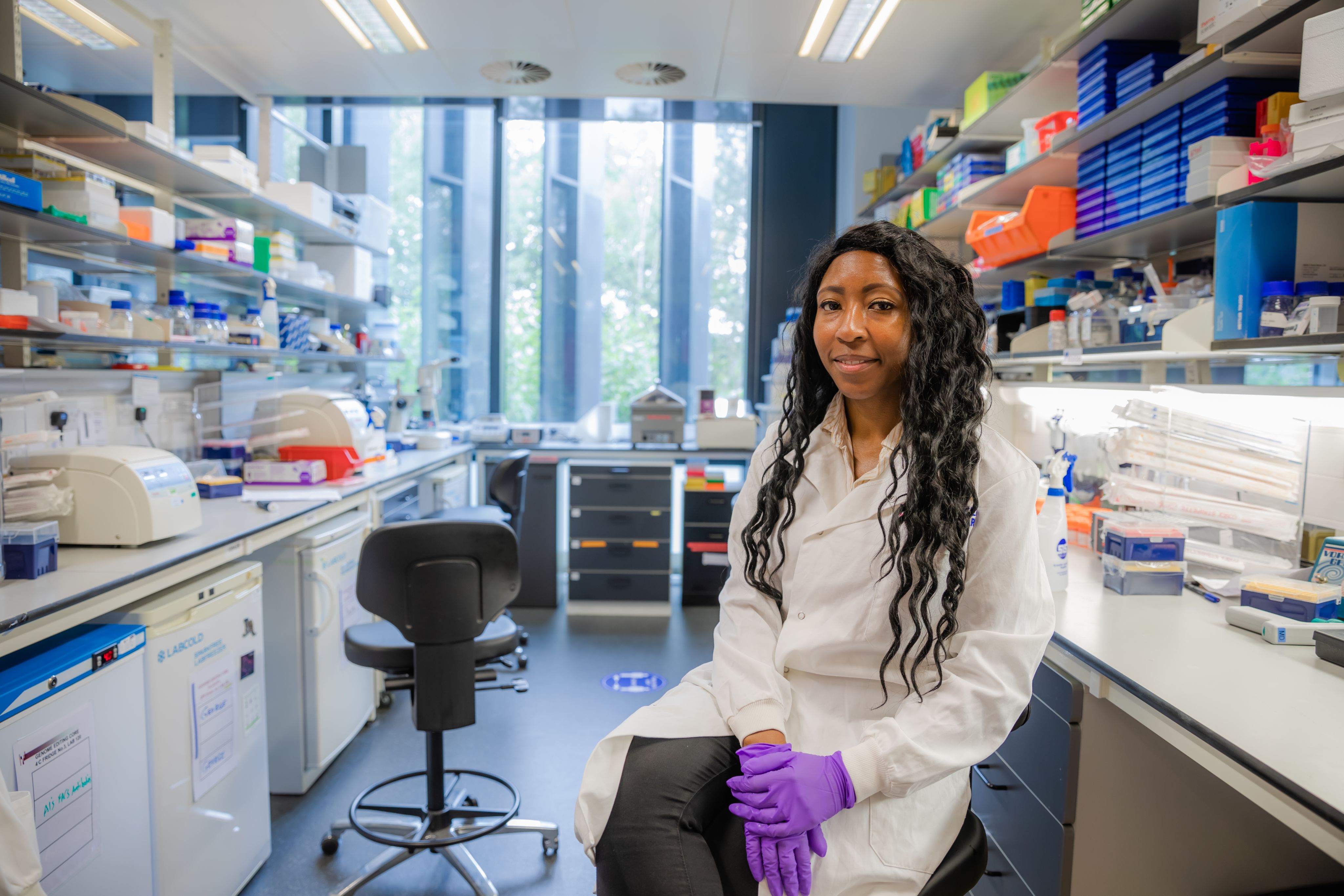
Ultimately my hope is that Black in Cancer is not needed anymore – that's the dream. Do I think that will happen in my lifetime? I don’t know, but I'm hopeful.
We’re beginning to think about the next generation, those who are still in school. We’ll be working to make sure that young Black boys and girls don’t think of themselves as ‘not a scientist’ but will be able to walk in whatever path they choose.
To those young people who might want to work in a field in which they cannot see themselves represented, I'd say: you have the ability to make the space for yourself. It may prove a challenge to get there and feel harder than it is for others, but persevere. And when you get there, remember that you deserve to be there, you earned it, be confident in that.
Sigourney is a PhD student at the Cancer Research UK Cambridge Institute, within the School of Clinical Medicine, and attends Girton College. She was named as a Forbes 30 under 30 honouree in 2021.
Sign up to attend the Black in Cancer Conference (10-11 October 2022) sponsored by Cancer Research, which coincides with the world’s first exhibition dedicated to cancer, Cancer Revolution, also held at the Science Museum.
Apply to take part in the mentorship programme as a mentor or a mentee. The deadline for applications is 11 September 2022.

* This article was originally published here

Post a Comment